Indoor Plants
Calathea Humidity: What to Measure Before You Buy a Humidifier
Work out whether dry air, uneven root moisture or strong light is spoiling a calathea's leaves, then make changes you can measure at home.
7 min read
Know what a healthy leaf does after dark
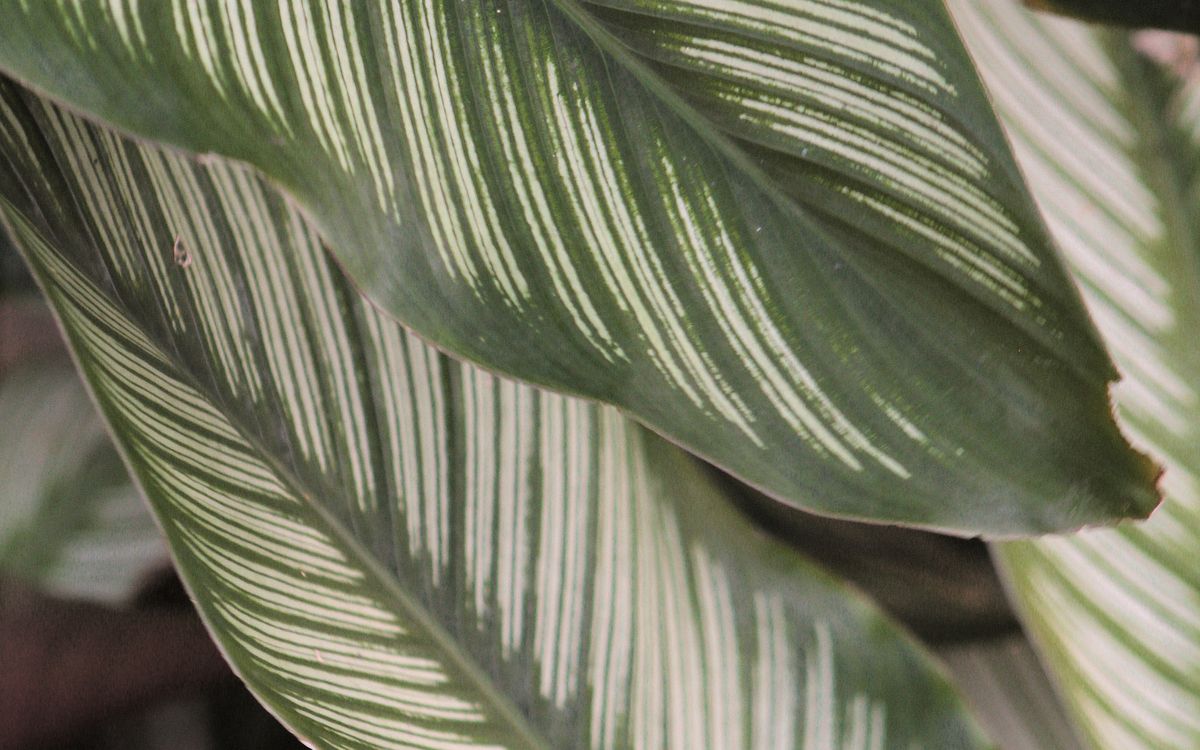
Many plants sold as calatheas are now classified as Goeppertia. Their relatives in the prayer plant family include plants with similarly patterned foliage, so a shop label can be broader than the botanical name. One behavior survives the naming difference. Leaves may rise or fold toward one another in the evening, then open again as the room brightens. A plant whose leaves move regularly and have supple margins is doing something different from one whose edges curl tightly and stay that way through the day.
Observe a leaf twice in the same day before assuming it needs water immediately. A new leaf begins in a narrow roll and opens over time. Leave it to unfold. Pulling it open to see whether the edge is stuck can tear the soft surface. A mature leaf that suddenly curls on a dry or hot afternoon deserves a look at both the mix and the air. Pay attention if the same thing happens to all leaves on the side facing a vent or bright window.
Measure humidity where the leaves spend their time
Put a small hygrometer at roughly leaf height and let it settle. A reading next to a kettle, against a cold pane or directly under the nozzle of a humidifier can be unlike what the foliage experiences. Check early in the day, after the heat has run and during the evening. A room that seems comfortable to people can have dry air for long periods once heating begins. Relative humidity also changes with temperature. Cooler air near the window may report a higher relative percentage and still be a poor place for a cold-sensitive plant.
Across several days, note the lowest readings rather than reacting to a single peak after a shower. Many commonly grown calatheas appreciate moderately humid air, often around 50 to 60 percent relative humidity in the immediate living area if the building can handle it. Choose a level that avoids condensation, damp walls or stale pockets. Exact tolerance varies by plant and climate. A specimen growing well with intact edges at somewhat lower humidity gives you a reason to leave the room as it is.
Readings are especially useful when comparing positions. A place beside a bright bathroom window can work if the room receives daylight and warmth for enough hours. A windowless bathroom may have humid air and unsuitable light. A bright shelf flanked by other plants can be steadier than a place directly over a radiator. Perform the measurements for a day or two before wiring a new appliance into the setup.
Give the roots gentle, steady moisture
A fine distinction determines much of calathea care. The root zone should be lightly moist when active, with spaces for air. Saturated mix stays wet and excludes oxygen. Let the exposed surface dry slightly before the next thorough watering, then discard drained water. In a small pot a finger check and the weight of the container together can help. If you find no clue because the top layer is coarse bark, check through a small gap at the rim or inspect the mix beside an existing drainage opening.
A plant near a reliable humidifier may lose water more slowly than it did under dry heat. Shorten or lengthen checking intervals in response to how the pot feels. If a big pot is still heavy while the leaves curl, watering it again can aggravate the problem. Check first for a cold draft, strong exposure or root damage. If a lightweight root ball is dry throughout, water evenly and allow it to recover. Dry roots and dry air can occur together. Addressing one may make the other easier to understand.
Potting mix should be fine enough to make contact with the roots, with enough coarser material to stay open. Many regular indoor mixes can be improved with a little bark or perlite if they compact quickly. A mix built almost entirely of large bark pieces can dry faster than you can track in a small pot. Match the texture to the container, house and how often you can make a check. Set the plant in a pot with holes and keep drainage out of any decorative cover.
Try a change you can test
Move a plant away from a forced-air vent if that stream reaches the leaves. A shift of half a metre can make a surprisingly local difference without changing the rest of the room. Recheck that the new site provides bright filtered light. Direct midday sun can fade the patterned blade and cause dry areas in a well-watered plant. Diffuse daylight through a sheer curtain often suits calatheas that developed in gentler nursery conditions. When winter light weakens, a shift slightly closer to the glass might help if the foliage remains clear of cold surfaces.
A humidifier can supply steady moisture when measurements show that it is needed. Position the outlet so mist does not continually coat the leaves or the window. Clean the unit using the manufacturer's directions and use the recommended water. A mineral cloud from some ultrasonic devices can settle as white dust around the room. That is a separate issue from a plant's watering supply. Keep cords clear of the watering path and stop if a nearby surface starts accumulating condensation.
Grouping several plants away from a vent can shelter their leaves from dry moving air. Leave enough gaps to inspect the undersides. A tray of pebbles can catch runoff, but its effect on a large room is generally limited. Keep the bottom of the pot above the tray's standing water. Misting produces only a temporary change, and frequent wetting can leave spotting on foliage. If you want to know what is actually helping, let the hygrometer and the condition of the next leaves answer.
Separate mineral injury from humidity stress
A persistent brown rim sometimes has more to do with water or fertilizer than the humidity reading. Inspect the rim of the pot for a white deposit. If you have hard water, softened water or frequent feeding, compare new growth over several weeks while using a reliably low-mineral irrigation source. Rainwater collected cleanly or distilled water may be suitable. Filtering equipment differs, and a basic pitcher filter may leave many dissolved salts in place. Keep other care steady during the comparison.
Watch which surface is affected. A broad bleached mark on the window side can indicate too much sun. Fine scattered stippling, dusty undersides and tiny threads near leaf joints suggest you should look for spider mites. Tap an affected leaf over white paper and examine what falls. Separate a plant with a likely infestation while you check nearby plants. Do not wait for a humidifier adjustment to clear pests. Existing brown leaf margins will not heal and can be left in place if most of the blade remains healthy.
If an entire plant darkens and collapses in wet mix, inspect the root ball. Firm roots and a sound base give you some options. Soft tissue, a sour smell and a root ball that readily falls apart into slimy strands indicate decay. Remove plainly rotten roots with a clean tool and use fresh mix in an appropriately small pot if enough viable roots remain. Regaining a useful root system takes time. Keep the air steady and the plant out of direct sun while it tries to establish.
Track the recovery on a leaf that grows in your home
An older calathea arrives with a record of past conditions written at its edges. Brown margins from the shop can stay obvious for the lifetime of those leaves. Pick a new roll and take a photo when it finishes opening. Write down the placement, recent low humidity reading and what the pot felt like before watering. Compare the following new leaf with that one after both have had similar time to mature. Two sturdy leaves with even margins tell you much more than a single night when the heater was off.
Keep the plant warm without placing it directly in a jet of dry heat. Humidity, temperature and light reinforce one another. A plant that grows steadily in well-lit, moderately humid air usually uses more water than a plant sitting cool and shaded. Let those changes guide when you check the pot. If the room is consistently dry and a modest humidifier does little, a different position may be more practical than watering the root ball more often.
There is room for some imperfection in a living leaf. A small tear where an old blade brushed against a chair and a tiny dry point on the eldest leaf may have little bearing on current care. If the overall clump holds its pattern and each new leaf opens without a persistent curl, keep the conditions steady. That stable run gives you a baseline when a real seasonal change arrives.
During a dry week, record the humidity when the dark evening leaf positions give way to daytime positions. If the plant opens normally even at the lower readings, you have a useful baseline for that room. If the leaves stay rolled through the day, compare their condition with the moisture below the surface and check for a new draft before raising the humidifier setting. This small comparison makes the next decision easier.