Indoor Plants
How to Grow Pothos on a Shelf
Train a pothos to drape neatly across a shelf, with enough daylight to keep the vines leafy and a pot you can remove for watering.
7 min read
Put the pot where you can still see it
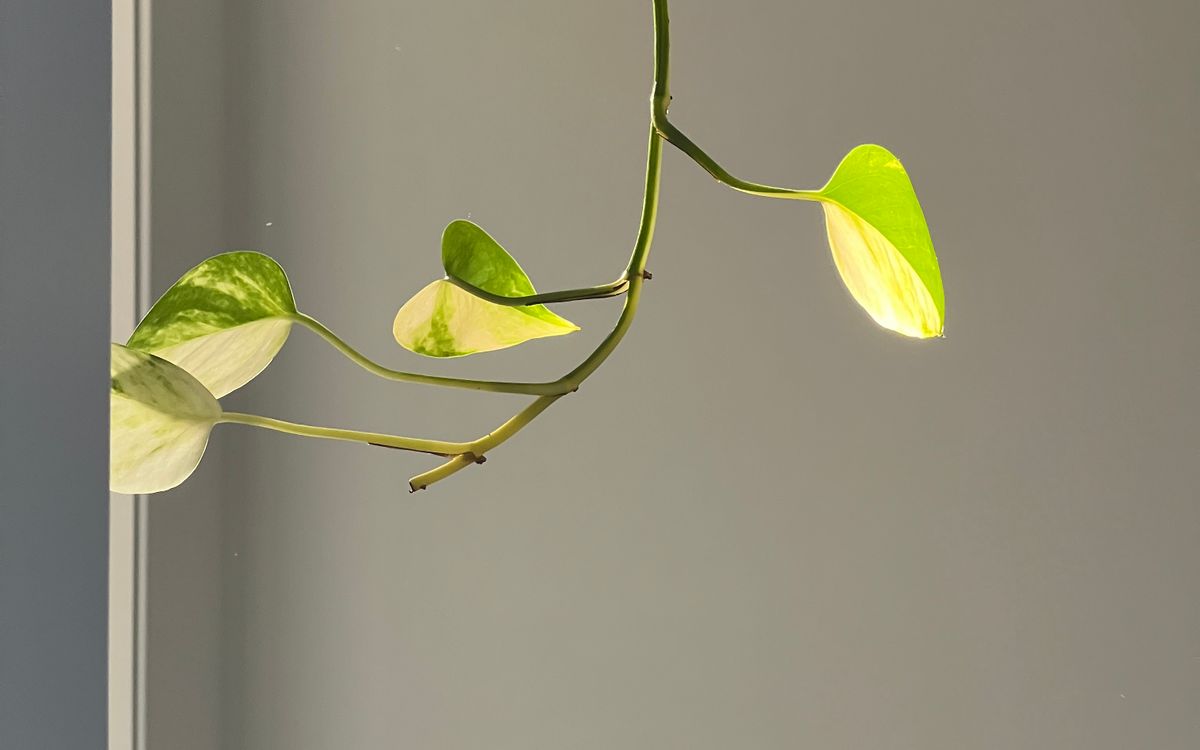
A shelf gives a pothos a natural place to fall. It can also put its pot above eye level, where a wet saucer and the earliest yellow leaves go unnoticed. Try the shelf with the empty container first. Can you reach it comfortably with two hands? Can you lift it straight out without striking the shelf above? A snug spot can work for a few small vines and become awkward as soon as the pot fills out. Choose a shelf deep enough to support the entire base and keep the heaviest weight toward the wall.
Count the window light from the shelf, rather than from the centre of the room. Crown and tips can live in very different conditions. If foliage at the rim looks stunted while the vine makes normal leaves after descending into a bright part of the window, the top of the shelf is probably the weaker spot. If a trailing vine runs along an interior wall and becomes bare beyond the first turn, its tip may need a different route. Bright indirect light makes a common golden pothos, Epipremnum aureum, easier to keep compact. It can tolerate a dim site, where growth is generally slower and the leaves can become smaller.
Choose an arrangement that suits the shelf
Drape several stems down one end if you want to keep the middle of the shelf usable. Distribute two or three healthy vines if the pot is in an open bookcase and you want a softer outline. A single vine directed horizontally can be a good fit above a doorway, but growing tips should stay clear of moving doors, heat sources and blinds. Leave room for the newest leaf to unfurl. A pinched tip can be difficult to investigate halfway up a wall.
Clips mounted on the shelf edge can guide a long vine while allowing the pot to be detached for watering. Use a wide clip or a soft, loose tie that will avoid pinching the stem as it thickens. Removable supports are especially useful in rented rooms. Check whether they will pull paint off the wall before using many of them. Roots may attach to textured plaster or other surfaces given favorable conditions, so offer a separate support if you would like the plant to climb. Pothos grown upward against a stable support may develop larger leaves than a freely trailing vine. Both forms are compatible with a shelf if the shelf can hold the pot and you can maintain it.
Give the root ball a reliable soaking
A hanging vine can wilt simply because the pot has dried. A wilted pothos in damp mix, however, may be struggling to take up water. That makes a finger check near the rim more useful than leaf posture alone. Lift the nursery pot and check the upper few centimetres. As the surface dries, moisture in the deeper root zone often follows. A small, root-filled nursery pot may dry quickly in summer. An oversized outer container close to a shaded wall can hide a considerably slower cycle.
Bring the plant to the sink if the vines can be gathered without strain. Water slowly around the surface and allow excess to escape through open holes. If the mix hardened and shrank from the sides while dry, try two passes separated by a few minutes. The first will soften the surface and the second can reach more of the interior. Bring the pot back only after it has stopped dripping. For a long vine that is difficult to shift, set the inner pot in a deep, rigid drip tray and empty the tray soon after watering, using a small siphon or a sponge if lifting is impractical.
Potting a small root ball in a much larger container increases the volume of mix that must dry. When a repot becomes necessary, choose a modest increase in diameter. If a dense mat has filled the pot and water runs through it too rapidly to maintain moisture, move to the next size and replace loose, compacted mix. A nursery pot inside a watertight outer pot is easy to manage on wood shelving because water can be drained at the sink and the cover protects the finish from stray drops. Lift the inner pot after every in-place watering to see whether the cover has collected a pool.
Renew a thin crown without losing the drape
A pothos stem has nodes at the leaf junctions and often a little aerial-root nub nearby. To shorten a long vine, make a clean cut just above a healthy node that will stay on the parent plant. A bud at a remaining node can take over growth, especially with good light. Avoid cutting all the stems on the same day if the plant is already sparse. Retain leaves that are feeding it and alternate which vines you shorten as new growth begins.
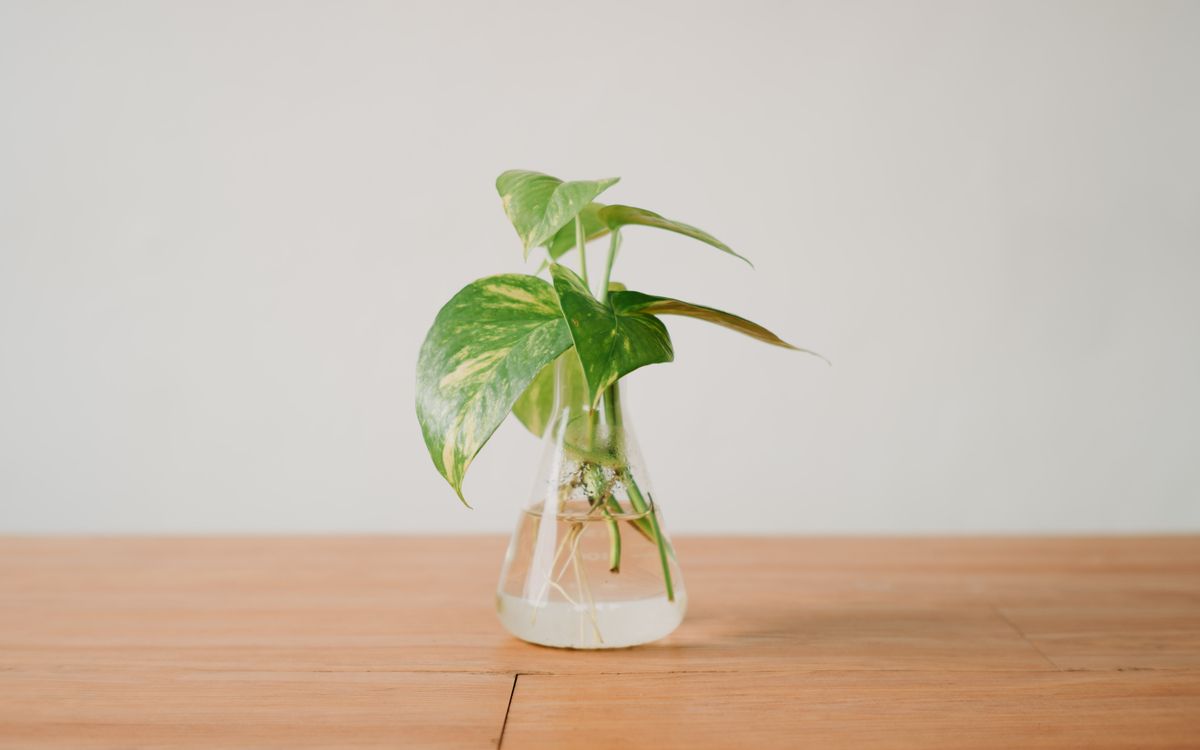
The trimmed piece can help fill the crown. Make cuttings with a sound node and one or more healthy leaves. Strip any leaf that would sit under the water or below the surface of a rooting mix. In water, keep the node immersed, refresh the water when it clouds, and plant when the cutting has several usable roots instead of an overly long tangle. For a potting-mix start, place the node in clean, lightly moist medium and keep it in bright indirect light while roots form. A cluster of rooted cuttings near the parent plant can make the crown denser. If the original pot has little spare room, grow the cuttings in a separate small pot and combine them later when you would have repotted anyway.
A vine losing individual older leaves far from the tip can still have healthy growing points. Work out whether the gaps are acceptable in that part of the display. A bare section is unlikely to produce a perfectly even new row of leaves along its old length. Shortening a vine and positioning the strongest young growth in the visible area is often easier than trying to disguise a long bare stem behind a row of books.
Read changes in color and leaf size
Two genetic forms can respond very differently to the same shelf. A pale variegated type has less green tissue in its patterned leaves and often needs more generous indirect light for a steady rate of growth. A green vine can be a more forgiving choice for the far end of a bookcase. In warm, intense sun, broad pale patches may scorch. A bleached, papery patch near the glass differs from firm cream-colored marbling that follows the leaf's original pattern.
If stems pushed straight toward the window recently and newer leaves are both smaller and more widely spaced, follow the direction of growth and check whether the tips are farther from useful light. Give the whole pot a brighter position for a few weeks and watch the next two or three leaves. Compact growth after the move tells you more than checking the color of old leaves. Avoid moving a plant from the interior shelf straight into hot midday sun. A step closer to a good window or a bright spot behind a curtain is easier on foliage accustomed to shade.
Inspect a few hidden leaf undersides when you lift the pot, especially after adding another plant to the shelf. Cottony material at nodes, tight webs around growing tips or scattered pale stippling are reasons to move the plant away for a closer look. Separate tools and leaf-cleaning cloths until you know what you are dealing with. One new yellow leaf beside a vine that has been draped across a hot lamp has a local explanation worth checking before treating the entire plant.
Keep the plant accessible as it grows
Hold each vine lightly near its base as you free it from a guide. The newest leaves are usually soft and easily creased. Long vines can be gathered in a loose loop for the trip to the sink. Divide them between two loops if you need to keep different directions straight. At the shelf, put the stem with the open growing tip back in first so the older foliage cannot trap it against a bracket.
Pothos foliage contains insoluble calcium oxalate crystals and chewing it can irritate the mouth of a person or pet. Keep the growing ends and fallen trimmings out of reach. A shelf that starts high enough may need another check once the stems reach a sofa or the top of a cat's climbing furniture. A tidy pathway helps here as much as it helps the design. When it is easy to reach the pot and to see each growing tip, you are more likely to spot the small changes that matter before they require major pruning.
If a preview of the arrangement helps, loosely gather the healthy tips with soft ties and test how the shelf looks from its usual viewing height. A vine that seems short while held at eye level may cover an entire shelf opening once the pot is in place. This is also a chance to find the side where runoff can be caught safely while the plant is still easy to lift.
Leave enough slack in the ties for the stems to thicken without pinching.