Plant Care
Reading Window Light for Houseplants
Use the view from leaf height, observe how sun moves across the room and choose a plant position that holds up through seasonal changes.
7 min read
Stand where the leaves will be
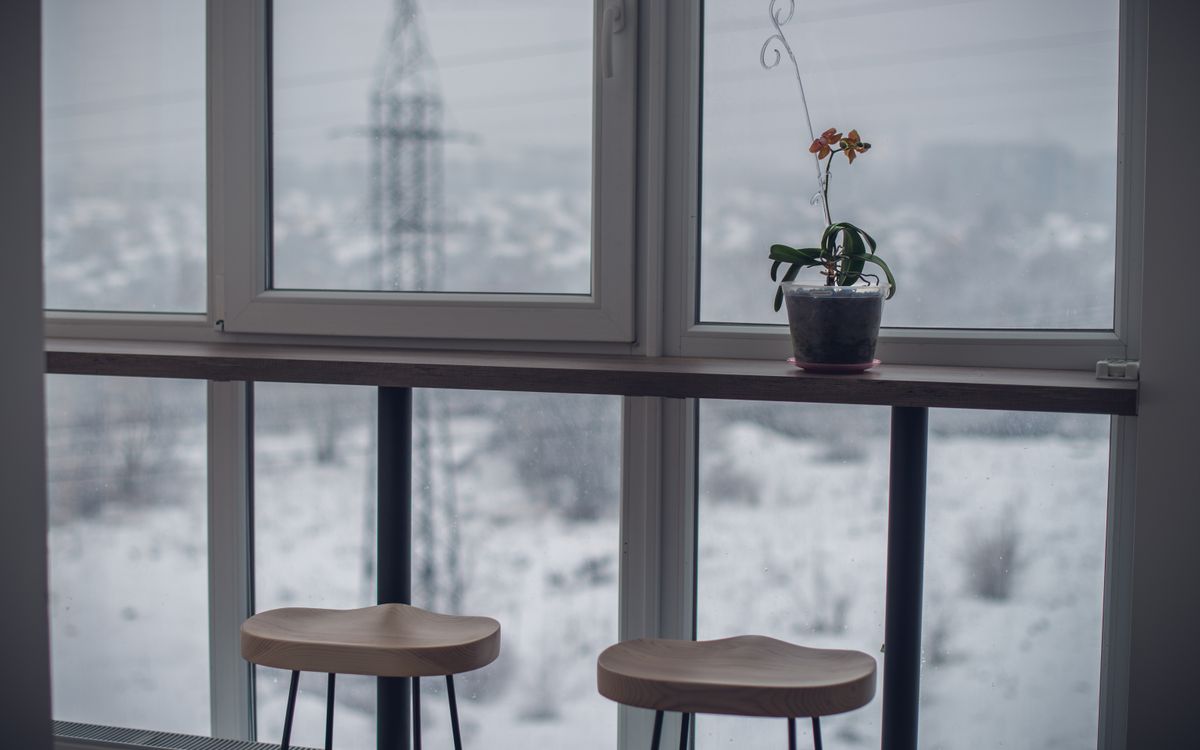
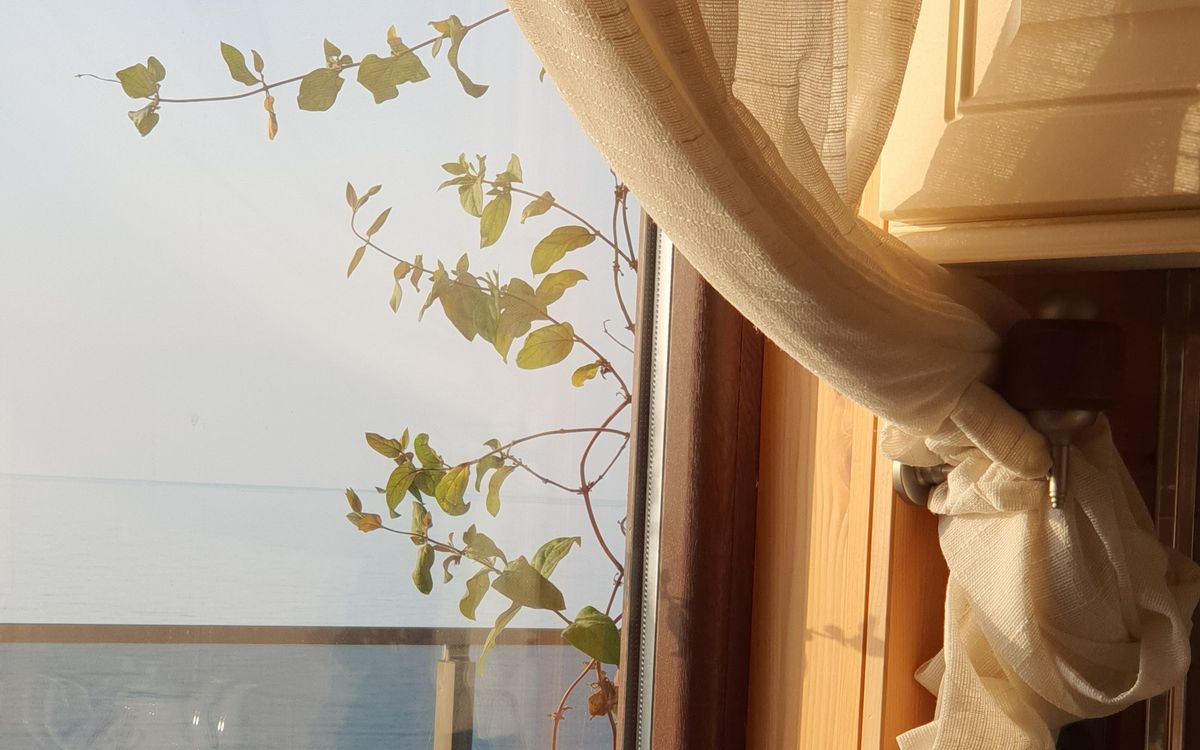
A room can look light and airy from the doorway while a plant in the far corner has a view of two walls and a small strip of glass. Window light depends on how much sky a leaf can see and what interrupts the path from the sky to the window. Put yourself at the plant's height. Look past the pane at the eaves, neighboring buildings, balcony railings and branches. A broad view of unobstructed sky gives more useful diffuse light even where no beam of direct sun falls on the plant.
Measure the placement from its actual surface. On a plant stand with a top close to the middle of the window, leaves start in a bright area and may stay there as they grow. On a high ledge above the pane, many leaves end up looking down at the top edge of the glass. A trailing vine might eventually reach light below. The crown and first nodes grow under a different exposure while the vine is short. A seat-level corner close to a large pane can provide more light than a high shelf at the same distance.
Glass and frames also change the picture. A frosted covering may spread direct light across a larger area and lower its intensity. A deep wall reveal can narrow the angle from which a plant sees the sky. Screens, solar film and layers of curtains reduce transmission by different amounts. Observe with those elements in their normal position. A window that looks clear on a sunny weekend may spend most weekdays behind a thick blind.
Follow the beam through an ordinary day
Check one clear morning, around the middle of the day and again late in the afternoon. Mark where you see sharply bounded sunlight on the floor or those surfaces a pot could occupy. A bright wall that reflects light across the room feels different from a strong beam that casts a dark, sharp-edged leaf shadow. Keep a quick sketch or take several photos from the same point. Basic changes in position are easier to imagine when you can see the full track of the beam.
An east-facing window often provides gentler direct exposure earlier in the day and diffuse light afterward. West-facing glass can send warmer light into the room late in the afternoon. The sunward exposure is generally south in much of the Northern Hemisphere and north in much of the Southern Hemisphere. Latitude, a tilted window, surrounding buildings and seasons can shift the pattern considerably. A compass direction starts the investigation while the window view and actual sun path complete it.
Look again when the seasons change. Winter sun comes in at a lower angle at many latitudes and can travel farther across the floor even though daylight lasts fewer hours. Deciduous leaves that sheltered a plant in spring may disappear later in the year. A maple beside a window can provide a fine summer filter and leave the room open to direct winter light. A fixed balcony may block high summer rays and admit lower rays below it. Over a year, these changes can matter much more than the window label.
Learn what bright indirect light looks like in practice
Bright indirect light usually means strong diffuse light without persistent, intense direct sun on the leaf. Near a window with a broad sky view, the leaf can register a useful amount of light even if its shadow is soft. A sheer curtain can alter a strong beam into something gentler, but woven fabrics differ in density. Compare the place with the curtain drawn and open. If you see a much narrower set of lit surfaces and far weaker shadows through the fabric, find a spot closer to the pane or choose a more open filter.
A hand shadow is a quick comparison tool. At leaf height, set your hand a short distance above a white card. A clear sharp outline suggests strong directional light. A soft shadow suggests a diffusely lit site. Barely visible shading can occur in a dim area, or in a bright room with light arriving from many directions. Use the view of the sky and available daylight to distinguish those cases. Shadow shape gives directionality, so avoid reading it as a precise measure of plant exposure.
Phone light meters can help rank candidate positions using a consistent setup. At the same time of day, hold the same phone sensor at the height and angle of upper leaves and compare the readings. Repeat on a cloudy day. Built-in meters and separate inexpensive lux meters estimate light based on human visual response. Their raw readings can be useful within the same room but have limits for evaluating specific plant spectra, especially under a colored lamp. A horticultural sensor can give more relevant information for designing an artificial-light setup.
Let the next set of leaves confirm your choice
Learn the usual leaf size, stem spacing and color for a particular plant before judging it. A pothos may get smaller leaves and longer lengths of bare vine as its growing tip reaches a dark area. A plant with a naturally upright style can bend toward one side when growth is strongly directed at the only source. Flowering plants may make healthy foliage and few buds when light is insufficient for the reproductive growth you expected. Existing leaves came from earlier conditions and may hold their form long after the pot moves.
On the other side of the window, look at where a damaged area developed. Irregular dry patches strongest where foliage faced the sun may be scorch. Leaf tissue pressed against hot or cold glass can also sustain contact injury. A plant that has lived for months under weak light needs time to adapt to a much brighter location. Shift it closer by steps, or filter the beam at first. Inspect the exposed foliage and compare the next leaves under the settled conditions.
Check drafts and room heat whenever a move changes them along with light. A brighter shelf over a radiator can dry soil and air rapidly. Glass at the edge of a single-pane window can be very cold during winter nights. If a window position combines better daylight with damaging temperatures, solve the position first with space, a shield or a stand clear of drafts. A small offset from the pane can maintain good daylight in a large window. Recheck in the evening to see what happens after the sun goes.
Choose the lowest-effort way to improve the situation
Move a struggling plant to the light before increasing fertilizer. If limited floor area is the constraint, clear a narrow space beside the window and place the pot at glass height. Thin one crowded shelf so the leaves of a larger plant no longer cast a lasting shadow on a smaller one. Clean dusty glass and foliage if either has become opaque. A few changes in arrangement often improve light without a large equipment purchase.
Decide how to manage a plant that faces one side. Rotating a symmetrical rosette or a young shrub in small increments can balance new growth. A vine trained against a board may be more attractive if its forward-facing leaves remain directed toward the window. Place the support to suit that natural direction. Moving a plant through large turns every few days can result in foliage arranged to meet no consistent source. The useful amount depends on the intended shape.
A timed grow light can cover a site where window exposure is inadequate. Choose a fixture intended for plants with a guide to coverage at several distances. A shelf of small plants can use a broad, even beam. A tall specimen needs enough spread to reach more than the top leaves. Leave a dark period each day and look for a response over a useful interval. Keep water away from the fixture and electrical cords. Avoid increasing light and fertilizer sharply at the same time so you have a chance to see what each change does.
Map one room at a time
Pick three practical positions and compare them on a clear day. Reserve the strongest diffuse position for a plant that needs to produce large new leaves or buds. Use the medium position for something whose new growth is already compact there. A shaded corner can display a species that tolerates lower light, provided daylight reaches it for a substantial part of the day. Test a pot for stability and watering access before calling the position finished.
Write down what you expect to see over the next month. A plant that was stretching should make closer-spaced leaves in a brighter position, while a leaf already scorched may remain marked. If you expect a new bud or shoot and the plant is in its slow season, give it enough time for the overall conditions to improve. The useful comparison is foliage of comparable age produced under each position.
You do not need a precise universal number for every window. A room map and several comparable checks can tell you which way to move each plant. Revisit the map when the blinds, trees, weather or height of the foliage changes. A window holds a different amount of opportunity when the leaves can see it clearly.