Edible Gardens
Cherry Tomatoes From One Good Patio Pot
Choose a cherry tomato to match your space, support it before the stems get heavy, and keep its roots supplied through flowering and harvest.
7 min read
Read the plant label before you buy a container
The words cherry tomato describe fruit size. A cherry tomato plant can still grow into a towering vine, with long branches spreading beyond a standard cage. For a narrow patio or a spot where you cannot attach supports, look for a compact determinate or dwarf variety with a mature size that suits the space. Some dwarf tomatoes still grow and fruit over a long period, so use the description of the specific plant. If your aim is repeated picking through an extended warm season and you have a secure tall support, a vigorous indeterminate cultivar can use the available height.
Start by identifying where light falls. Tomatoes need a sustained period of direct sun to produce well, commonly about six to eight hours under typical garden conditions. The open end of a patio may get enough light while the area beside the back wall sees sun mainly during a short midday period. Watch during the relevant season, including when nearby trees are in leaf. If the only bright spot is inaccessible for watering, a small vigorous tomato may be less practical than a compact plant in slightly better reach.
Set up enough mix and a support you can use
A true miniature tomato can grow in a smaller container than a full-size cherry vine, although a larger volume moderates moisture swings. Five gallons, around 19 liters, or more is a workable starting point for many compact types. Vigorous indeterminate plants benefit from substantially larger volumes. Confirm the needs of your cultivar. A pot should have intact drainage and enough base width to stay stable after the upper branches load with fruit. Set it inside any railing and confirm that the floor will handle the filled weight.
Use quality container mix rather than heavy garden soil. If it includes an initial charge of fertilizer, read the instructions before adding more. Secure a cage or stake while the plant is small, before the roots fill the pot. A shorter cage can contain the branches of a compact tomato. A longer vine needs a more substantial trellis or an appropriate secure attachment. If using ties, leave room for stems to thicken and inspect them as growth continues. A tall trellis balanced by a light pot can tip when a gust catches the wet canopy.
Transplant after the weather is ready
Tomatoes grow best in suitably warm conditions. Wait until the local risk of frost has passed and temperatures are appropriate for the plant. Harden off an indoor-grown transplant gradually before leaving it in full sun. If the transplant is leggy but healthy, tomatoes can form roots along a buried part of a nongrafted stem. Remove foliage that would be covered and keep healthy upper leaves above the mix. Keep a graft union above the soil on a grafted plant so the desired rootstock remains in use. Handle its graft and stem gently when removing it from the nursery pot.
Water around the root ball and let the mix settle. Leave space below the rim to contain a slow pour. If the plant is small compared with the container, direct most of the first waterings to the area it can reach while keeping surrounding mix in good condition. A container with highly variable moisture can be hard to inspect when leaves reach both sides of the rim. Leave a place where you can feel below the surface and water without soaking fruit. Add mulch if needed after the mix has warmed suitably, keeping it clear of the main stem.
Keep watering consistent when fruit begins to size
When a tomato is filling with fruit, its water use can rise rapidly. Check the root zone in the morning over a few hot days and repeat the check later to see whether one watering actually lasts. If water runs out immediately and the center of the root ball stays dry, water in two slow passes. Give the first pass time to soak in before adding the second. Keep the lower outlet clear. A pot that stands in water all afternoon can have drooping leaves despite plenty of moisture. Check the root zone before you react to a plant that bends slightly at the hottest point of the day.
A dark, leathery patch at the blossom end of the fruit is commonly associated with blossom-end rot. Erratic moisture can interfere with calcium uptake within the plant even when the mix contains enough calcium. Review the pattern of watering and examine drainage. Adding calcium indiscriminately does not correct dry roots or inconsistent moisture. Fruit cracking can also follow a sharp water change, especially when a near-ripe fruit receives a surge after drier conditions. Pick ready fruit before a storm if cracking has been a problem, and aim for more even root moisture as the next bunch grows.
Feed to support flowers and fruit
Use a fertilizer suitable for vegetable containers and follow its label. Timing depends on the mix, plant stage, and product. A plant growing rapidly in unfertilized mix may benefit from feeding once it is established, but a mix that already supplies nutrients can require a delay. Excessive nitrogen can encourage a mass of leaves and stems at the expense of manageable growth and fruit production. A yellow leaf close to the soil or far inside an old branch does not prove that the whole plant needs more fertilizer. Look at new growth and consider whether roots are dry, cold, saturated, or crowded.
A tomato flower can release its own pollen. Gentle air movement and flower movement aid the process. Many plants set fruit outdoors without intervention. If a balcony is extremely sheltered, lightly tapping a support when open flowers are dry can encourage pollen release. Flower drop can also follow very hot or cool temperatures and other stress. If the plant is healthy and temperatures have recently been extreme, watch the next group of flowers before changing fertilizer or sacrificing its best sunlight.
Prevent a pruning decision from reducing the crop
A healthy leaf makes energy and shields fruit from sunscald. Remove damaged leaves, those touching the mix, and excessively congested lower growth as needed, using clean tools. Do not strip the plant along its entire length while green fruit is ripening in strong sun. For a compact determinate variety, many small side shoots contribute to the planned crop, so heavy pruning can reduce it. An indeterminate vine grown on one or more supported leaders can be managed by retaining the stems you can support and thinning selected shoots as the plant grows.
Check inside the cage when the first fruit clusters put weight on their branches. Lift a drooping branch into position and adjust the tie away from growing fruit. Tightening a stem to the pole does not make the branch less heavy at the growing point. Support fruiting branches where needed and leave room for movement. Keep supports easy to access so a broken main branch does not force you to reach deep into the cage over the ripest fruit.
Harvest based on color and texture
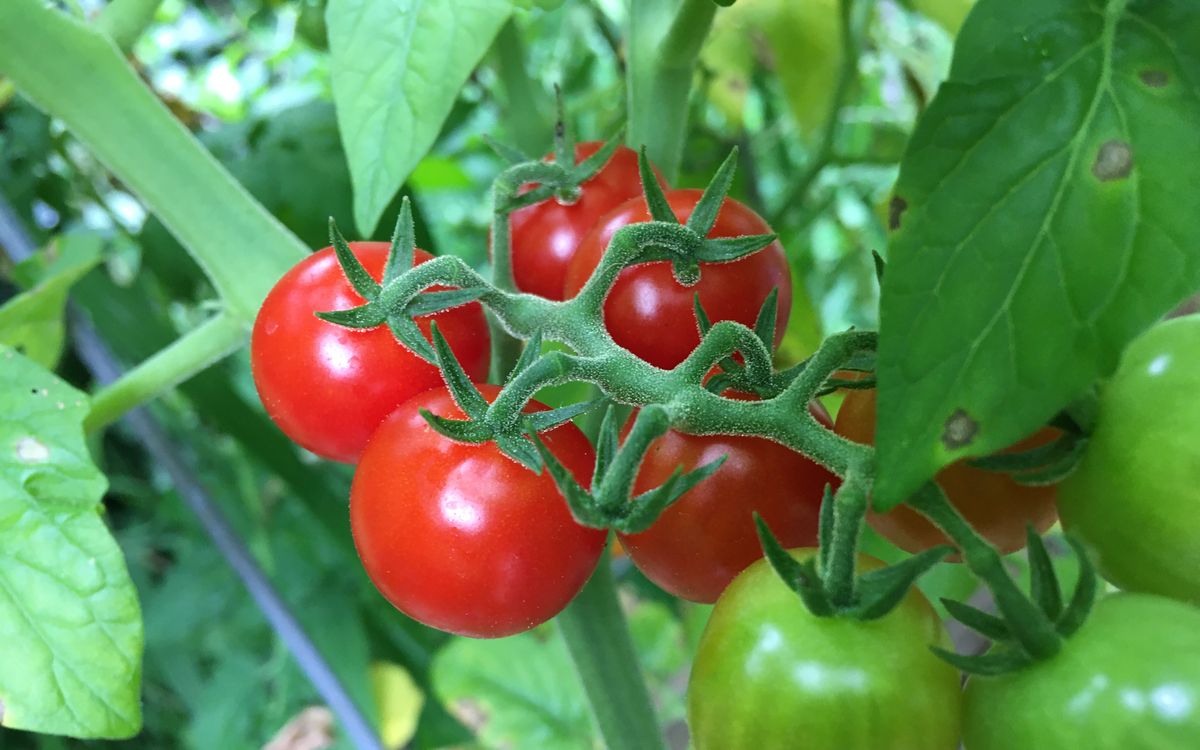
Pick cherry tomatoes when they reach the mature color typical of their variety and separate readily or can be snipped from the cluster. Color varies with cultivar, from red through orange or yellow to purple or green shades at ripeness. Try one fruit at different stages to learn the flavor you prefer. Pick more frequently during warm weather. Some varieties can split if left too long near ripe, especially after rain. Use cracked fruit promptly only when it remains sound, and discard fruit with spoilage, deep damage, or contamination.
Check lower leaves during harvest for expanding spots or discoloration. Water at the mix and give foliage space to dry. If several branches decline at once, check root zone moisture and compare affected and healthy parts of the plant. Remove seriously diseased material according to local guidance and clean tools after use. A young plant with unusually distorted growth may need a diagnosis rather than a cosmetic trim. Keeping one patio pot gives you a good view of changes because you can observe the whole plant without climbing into a bed.
Compare the newest fruit with the first cluster
Early fruit may have developed while the roots were still establishing and temperatures were more variable. If later clusters begin to size normally, a few marked fruits in the first cluster need not point to an ongoing issue. Photograph the newest cluster and check again after the next round of hot weather. The state of fruit that formed under your current watering pattern is more informative than a blemish that appeared weeks before you corrected the pot's moisture.
End the season with a useful note
In cooler areas, pick usable fruit before frost and remove the exhausted annual plant. Clean the support before storing it, particularly if disease was present. Hold on to the cultivar name and record whether its mature size suited the container and the light. If you would need a large new support next year to grow it well, compare that investment with selecting a naturally smaller cultivar. If the plant was easy to water but received too little light to reward the wait, choose the variety and location together rather than buying a second pot immediately.
The most helpful number to keep may be how often one container needed water at its largest. Combine that with the weeks when you could pick a worthwhile handful, and you have a specific reason to repeat a choice. A single tomato plant that fits the gardening space can make the difference between harvesting regularly and managing a vine whose fruit stays out of reach.