Edible Gardens
Grow Strawberries in a Trough You Can Reach
Choose strawberry plants for a small trough, set each crown at the right height, and protect developing berries without crowding the leaves or trapping moisture.
7 min read
Choose the harvest pattern before planting
June-bearing strawberries generally offer one main crop each year, with local timing that can fall outside June. Day-neutral types can flower and crop over a longer part of the growing season under favorable temperatures. Plants sold as everbearing can also offer a more spread-out harvest, though the exact pattern depends on their variety and conditions. For a trough next to the kitchen, an extended harvest makes it practical to pick a few ripe berries at a time. A concentrated crop can make more sense if you want a larger picking over a shorter period.
Alpine strawberries can suit small spaces, and their berries are typically smaller than those of garden strawberries. Read the expected plant width and local cultivar recommendations. Buy sound plants from a reputable source, with firm crowns and healthy roots. If you have only a few spaces, vigor matters more than a particular color on the variety label. Check that the site gets a useful stretch of direct sun. In hot conditions, a move away from the most punishing reflected afternoon heat may save the fruit and still leave ample light.
Set up a trough with stable moisture
A shallow root system still needs adequate volume. Choose a broad trough deep enough for the cultivar and conditions, with accessible drainage holes. Very small pockets in a tower or a basket can dry at different speeds. A straightforward trough can be easier to water evenly. Set it on a stable surface before filling it and check that runoff can leave without wetting a building or walkway. If fruit will hang over the edge, leave enough room to reach it from the front. A tight gap against a wall makes it more difficult to find a berry that has gathered mold.
Use a fresh well-draining container mix that can hold even moisture. Heavy garden soil can become compact in a trough, and a layer of stones takes away root volume without solving poor drainage. Moisten the mix if it is very dry before planting. Position each crown using the spacing recommended for the cultivar. A trough can look sparse on planting day and still become tight once the leaves spread. Leave a useful gap between plants for air and for light to reach flowers. If you can fit only two full plants at good spacing, two will be easier to maintain than three crowded ones.
Find the crown and get its height right
The crown is the short central part of the strawberry plant where roots emerge below and leaves arise above. Find it on each transplant before you make the planting hole. Set it near the surface with roots covered and the growing point open. A crown buried too deeply may rot, while planting too high can expose and dry the roots. Work the roots down into the mix gently. If planting bare-root stock, follow the supplier's directions on storage and preparation and avoid bending a long root system into a tight shallow pocket.
Firm the mix around the roots and water thoroughly. Recheck height after settling, particularly after the first heavy rain. If roots are showing, add a little mix around them. If the crown has sunk, correct its position while the plant is still small. A paper nursery label can act as a reference so you know which crown has had trouble. Mark varieties and dates if you are comparing them. Once they grow into one line of foliage, it is difficult to remember which plant was slow to begin.
Manage early flowers and runners for your goal
A newly planted strawberry will initially spend energy developing roots and leaves. Depending on type, stock, and local guidance, removing some or all early flowers can encourage establishment. For a newly planted June-bearing bed, first-season flower removal is a common approach. For certain day-neutral plantings, guidance calls for a shorter initial removal period before allowing fruit. Use directions for the cultivar and system you chose. A plant moved from a tiny cell into fresh mix may need time to make a broader root system before supporting a heavy crop.
A runner is a long spreading stem with the ability to form a daughter plant. If you want berries from the trough, snip most runners before they crowd the planting or become entangled. Leave one healthy runner if you want a replacement. Set the young plantlet in a separate pot of fresh mix with contact at its rooting point, and use a small pin where safe to keep it in place. Keep the mix moist and make the cut connecting it to the parent only once it is rooted and growing. Use only healthy parent plants for propagation.
Water carefully while berries are filling
Strawberries do better with even moisture than with repeated swings between wilt and saturation. Check the mix near each crown because one end of a trough can dry earlier than another. Water in a slow line near the roots, preferably where leaves and developing fruit do not remain wet. Give the surface time to absorb the water before finishing. A pot that darkens on the outside while the root zone still feels dry may need two passes. Confirm that drainage is clear and empty a saucer if it has become a standing reservoir.
Feed with a product appropriate for fruiting containers if the starting mix and plant growth call for it. Follow label directions and avoid overfeeding, especially if the plants already have a dense leaf canopy. Strong concentrations of fertilizer can harm strawberry roots. If leaves are weak on a recently potted plant, look first at crown depth, water consistency, and light. A red tinge in some older leaves can occur for more than one reason, including season and temperature. Use the condition of the youngest leaves and the wetness of the mix to guide a closer look.
Protect the berries without enclosing the plant
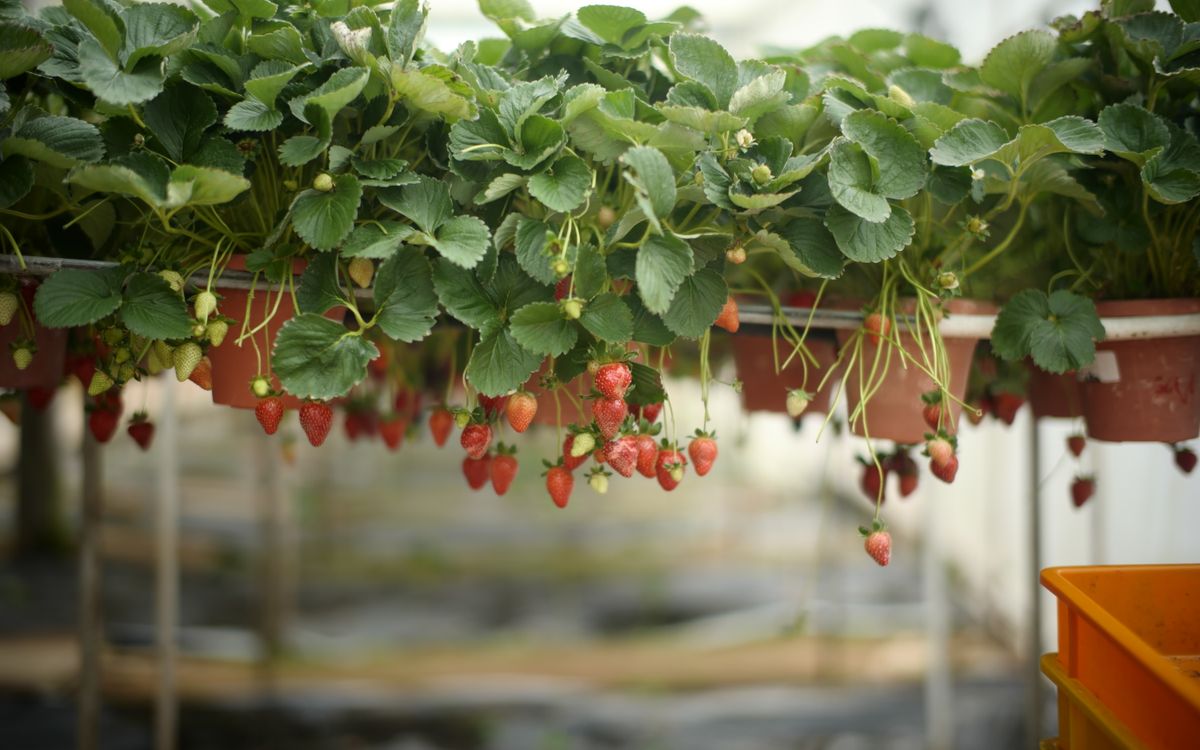
Keep fruit off persistently wet mix where practical. A clean light layer of suitable straw can help, provided it is kept away from the crowns and does not obscure drainage or moisture checks. Berries hanging just over a clean rim may stay drier than fruit crowded in the center. Remove spoiled berries promptly and maintain room for air. Grey mold can move among flowers, damaged fruit, and leaves, especially in humid conditions. A quick morning inspection during ripening can remove an affected fruit before it sits against its neighbors all day.
If birds are taking the ripest berries, use an appropriate cover that can be secured and inspected, and check regularly that wildlife cannot become trapped. A cover should avoid contact with the berries where possible. Account for pollination while flowers are opening. In a sheltered site, access for pollinating insects and gentle air movement can support better fruit development. An individual misshapen berry can have several possible causes, so check the rest of the crop before assuming a pest or fertilizing problem.
Pick ripe berries and review the whole trough
Strawberries taste best when picked at the cultivar's ripe stage. For most red-fruited varieties, visible color should extend over the berry, including near the shoulder. Some cultivars are naturally a different color, so use the description and the feel of a mature berry as well. Snip or pinch the stem just above the fruit if pulling would disturb a cluster. Use clean hands and a clean container, keep damaged fruit separate, and wash fruit under clean running water before eating. A strawberry picked far too early will not develop the same flavor off the plant.
Look beneath the canopy while picking. Identify old leaves that have dried or appear diseased and remove them appropriately with clean tools. Check for slugs or other pests if low fruit shows holes with damp edges. Put sound ripe berries within easy reach in the next harvest. Moving a trough a little can expose the hidden side, but a midday move into much stronger light can also add heat. A regular picking route from one end to the other is often enough to find everything without shifting a productive plant.
Pick up the container's problems early
Look in the corners of the trough after a thorough watering. Mix at the ends may shrink first, especially against a sun-warmed surface, while the middle stays consistently damp. When you adjust the watering, check the two outer crowns before moving on. Uniformly watered roots give you a fairer basis for evaluating differences between the plants.
Prepare the planting for the next season
Cold tolerance and winter protection depend on plant type and local climate. Pots can expose crowns and roots to low temperatures and freeze-thaw cycles. Keep a healthy trough drained and shelter or insulate it as needed, leaving access for occasional checks when the mix is thawed. In particular climates, a suitable cool protected area may make it easier to overwinter plants. A warm indoor room is unlikely to suit plants that normally rest outdoors. Note when last season's leaves became quiet and when the first new ones emerged.
If plants no longer crop well or show recurring disease, replace them with suitable healthy stock and clean the container before replanting. If the trough produced sound fruit but stayed crowded, reduce the number of crowns next time or separate an established daughter plant into another pot. A few healthy plants with space to dry can offer a longer run of good berries than a dense trough where fruit disappears at the center. Use the season’s clean pickings and care routine to decide how many plants your space can support.