Edible Gardens
Grow a Lush Pot of Mint Without Letting It Escape
Contain mint's spreading roots, keep its leaves tender for frequent picking, and learn when to divide an older pot into a few manageable new plants.
7 min read
Give mint a container of its own
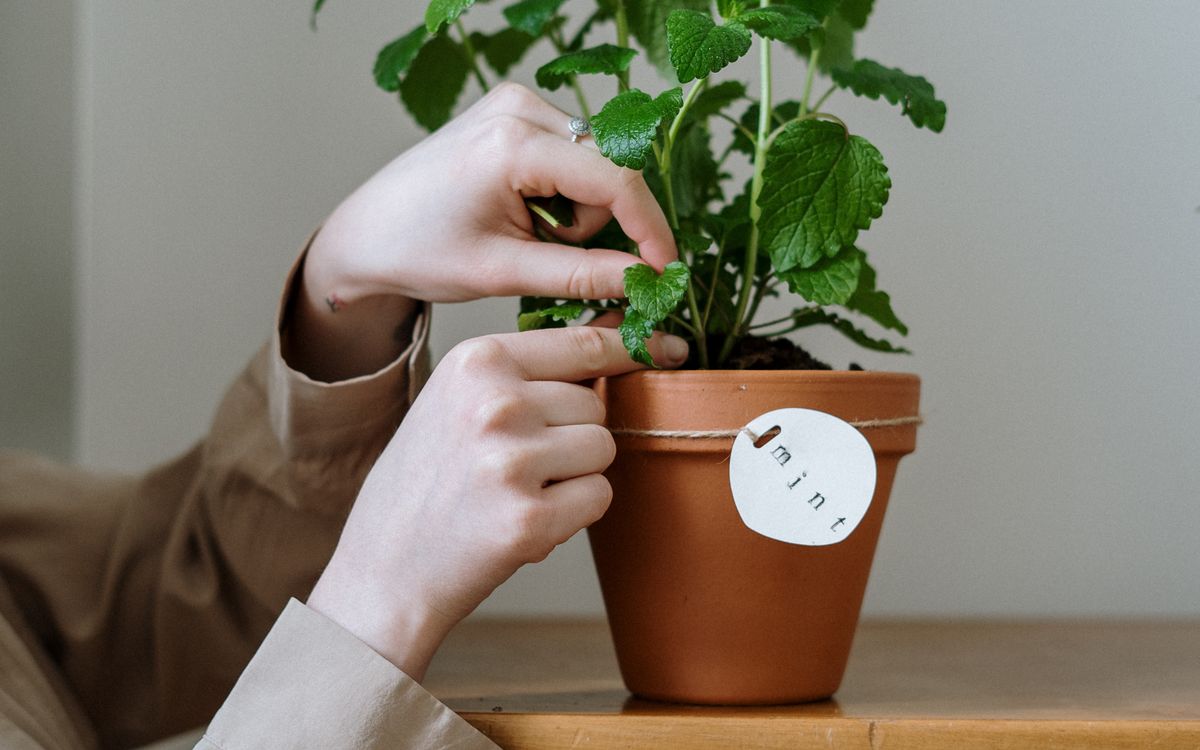
Mint has a way of appearing a surprising distance from the place it was planted. Creeping underground stems make new shoots, and stems trailing over a pot can root when they touch moist soil. Give mint a freestanding pot with plenty of room rather than letting it share a mixed planter. Keep it on a suitable paving surface, or set it so runners cannot reach the ground through the outlet. Check the base in active growth. If roots emerge from a drainage opening that sits directly over moist ground, lifting the pot at that point can save you from disentangling an established patch later.
Select a variety by smell and expected use. Spearmint suits many drinks and savory dishes, while peppermint has a stronger flavor and makes a distinct infusion. Named types can vary from plant to plant and can sometimes be sold under casual names that hide important differences. Ask for a labeled culinary variety. Seedlings may vary if they come from seed collected from a named cultivar. Division or cuttings preserve the characteristics of a mint you already like. Keep varieties in separate pots so their shoots can be distinguished once the canopies fill out.
Build a root zone that holds useful moisture
Use a broad pot with working drainage. A diameter around 30 to 40 centimeters is reasonable for a vigorous established mint, with a smaller pot useful when starting from a small cutting. Be able to lift the plant out for division at the end of a season. A rigid ornamental pot narrower at the neck than halfway down the sides can be difficult to empty once mint has filled it with roots. Choose a simple straight-sided inner pot if the outer container is an awkward shape.
Use fresh container mix that retains moisture without staying saturated. Mint appreciates more consistent water than rosemary or thyme. A pot made of a less porous material can reduce watering in particularly dry or windy places. If the only available pot is unglazed terracotta, watch how quickly the sides dry on bright afternoons. In a patio climate with frequent showers, an open outlet matters more than whether the container is porous. Keep the crown near the former soil level, water to settle it in, and let excess escape.
Find a light balance that gives tender leaves
Mint usually grows well in sun or partial shade. Choose between them according to summer heat and how quickly the pot dries. In a cool spring it may do well in an open spot. In dry summer heat the same pot may wilt repeatedly beside sun-baked masonry. Move it to a place with bright light and some shelter from the harshest heat if that improves growth. A plant living in deep shade can make long stems with small soft leaves that take time to replace after harvest. Try a spot with morning sun and watch the next stems for closely spaced leaves.
Check water near the center and along the edge. Mint can use a lot of water once its broad canopy forms. Water when the root zone is starting to dry, then drain the pot. A root-bound mint tends to reach that point more quickly, even if the pot absorbed water the day before. If the outside of the root ball is a tight carpet and the pot occasionally dries to the point of collapse, use division to restore space. Frequent small splashes only delay the underlying work and can make the surface wet while the deeper mat stays dry.
Harvest stems instead of stripping one plant bare
Choose a stem with healthy leaves and cut just above a sound leaf pair or branching point. Harvest from several parts of the pot so light reaches new shoots and the plant keeps a broad, growing canopy. A tip taken early in the growing season can encourage side shoots and delay a sparse upright shape. Cut useful sprigs before flowers dominate if tender foliage is the main aim. Leave a separate section to flower if you like having pollinators in the garden, and trim spent stalks after you are finished enjoying them.
Check the youngest leaves before a harvest and choose the ones least exposed to grit and water splash. Wash the sprigs under clean running water before using them. If the sprigs are for a meal, adjust the quantity after smelling a torn leaf. A strongly scented variety can be overpowering in the same volume that suits a milder one. Put any kitchen scraps that might root where they cannot establish outdoors if keeping the plant contained is important. Intact stems left in a damp heap can remain surprisingly viable.
Divide a pot when watering becomes difficult
A mature mint often announces the need for division by growing mainly along the rim. The center can become sparse as new shoots race toward unused space. The container may dry fast even after a thorough watering. As active growth is beginning or at another appropriate cool period, water lightly if the root ball is dusty and tip it out. Look for healthy pale or firm roots and vigorous outer sections that carry new shoots or sound buds. Put aside a few good portions and remove the most congested old center when it is unproductive.
Use clean hands or clean tools. A portion with several adequate roots has more reserves than a piece of thin stem. Set divisions at their former depth in fresh mix and water gently to settle the edges. Put a newly divided plant in good light with modest protection from harsh afternoon sun until it starts growing. Check the middle rather than letting dry root fragments repel water. Dispose of unwanted viable runners in a way that prevents them spreading into nearby soil. A handful of roots in an open compost pile can become a living plant if the conditions suit it.
Root a spare plant in a different way
Healthy nonflowering stems can make roots in water or in a suitable propagation mix. Snip one below a node and remove leaves from the section that will be buried or submerged. Keep the remaining leaves exposed to bright light without harsh heat. If using water, refresh it as needed and transfer the cutting once there are several roots long enough to handle. If using mix, keep it gently moist and choose a small clean container. New growth and a light resistance to movement indicate the cutting is starting to establish.
This is useful when you are offered one sprig of a mint you like. It also allows you to replace a pot that has become difficult to divide. Use a sound parent plant, especially when an established pot has unexplained spotting or distorted new leaves. Avoid sharing mix, wash water or dirty tools among plants showing possible disease. Label a new pot immediately if varieties matter in the kitchen. Before long, two mint plants at the same stage of growth can be hard to identify from a few leaves.
Read spots and sparse leaves in context
The oldest low leaves may yellow naturally when the pot has plenty of new growth. Look more closely when the newest stems are pale or collapse, roots smell rotten, or orange or brown raised spots spread underneath the leaves. Mint rust and other problems can spread, so isolate an affected container and get a reliable diagnosis before propagating or distributing pieces. Prune out material as appropriate and clean tools afterward. Edible leaves with disease or significant damage are best set aside. Review water and drainage if the entire plant has been persistently wet.
A mint with small leaves and very long intervals between leaf pairs may simply need more light. Yellow lower leaves after a dry spell can be related to interrupted water supply. Use a light, appropriate fertilizer when a healthy container plant is growing in otherwise depleted mix, following directions for edible herbs. Replace packed old mix and make space for roots when that is the main limitation. More fertilizer in a pot without drainage or room for new roots will not correct its structure.
Inspect the rim after a growth spurt
Move the longest branches aside when you water. New roots can form at the nodes where a trailing stem rests against damp mix, even in another nearby pot. Lift those stems and trim them when you want to limit spread. If age or weight makes lifting the whole pot difficult, place it where you can still see the outlets from one side.
Prepare for dormancy and spring return
Many culinary mints are hardy perennials and can die back above ground in cold weather. Check the cultivar and local climate. Protect container roots as needed and keep the mix from staying saturated. A resting pot under cover may need occasional checking during mild periods. Label it before foliage disappears. Depending on the species and conditions, the first new shoots may arrive after the surrounding patio has looked warm for some time. Resist throwing away a quiet pot unless you can confirm its roots are no longer viable.
When mint returns, use its new growth to judge how much to keep. Preserve a vigorous section, move it where you can reach it often, and reserve another for succession if you harvest heavily. With enough light and an evenly moist root zone, a vigorous small plant can fill its pot before the season ends. Manage the new runners while they are visible, and a single good pot will be much easier to live with than a dozen volunteers.