Indoor Plants
How Much Light Does a Snake Plant Need?
Find a bright position for a snake plant, recognize the limits of low-light tolerance and adjust watering as its stiff leaves and underground rhizomes grow.
7 min read
Start with the leaves you want to grow
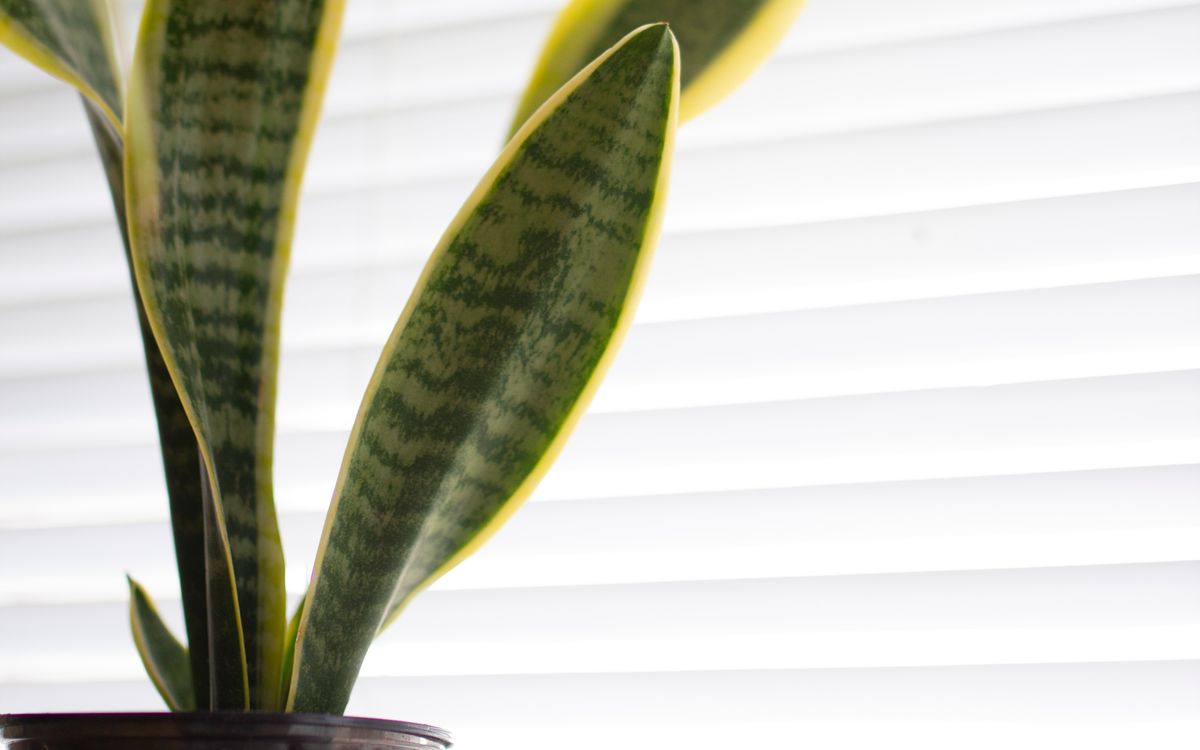
The common snake plant, Dracaena trifasciata, was sold for years as Sansevieria trifasciata. Its underground rhizomes give rise to pointed, upright leaves that store water. Compact bird's-nest forms, tall green types and yellow-edged cultivars share the broadly forgiving habit that made them a staple of offices and small flats. Their performance can still diverge in the same room. A miniature rosette on the edge of the window may grow steadily, while a large variegated plant set across the room can remain almost unchanged for months.
Bright indirect light suits most indoor specimens. A plant a little back from a clear window, where it can see a wide stretch of sky, ordinarily has much more usable daylight than one on the opposite wall. If there is a sheer curtain, check whether the whole window stays covered or whether a narrow shaft of direct sun reaches a few of the leaf tips. Consider the sun's angle at different hours. A lamp reflected off the glass at night makes a room look brighter to people while contributing very little to the long daytime period the plant uses.
How a low-light site changes care
Surviving shade often means using stored energy and replacing foliage slowly. A snake plant can hold its firm leaves for a long time, disguising the fact that growth has stalled. If you need a plant to occupy a shaded spot and are happy with the size it is now, this can be workable where it still receives daylight. If the aim is a fuller cluster, place it closer to the source. No snake plant can keep growing in a windowless room unless it receives sufficient artificial light.
Compare new leaves with those made earlier. Narrow, pale leaves that lean markedly toward the window and remain thinner than usual can point to light limitation. A green cultivar naturally differs from a strongly variegated one, and its youngest leaves may need time to harden, so compare mature leaves of similar age on the same plant. A single leaning leaf can simply be crowded by a neighbor. Look at several growing points and note which direction they take.
Water use slows in a shaded or cool room. The interior of a pot can remain damp long after its exposed top has dried. A plastic container inside a close-fitting ceramic cover can retain water even longer if drainage is left in the cover. Use a thin skewer in a clear space near the rim or compare the weight of a recently drained pot with its weight several days later. A small plant can often be lifted gently by the pot. For a larger plant, tip the container only slightly while supporting the rigid leaves.
Move toward the window in stages
A little mild direct sun can suit an established snake plant, but the change from a dim shelf to uninterrupted afternoon sun can leave permanent pale patches. Introduce brighter conditions in steps. Move the plant closer to the window for a week or two, keeping it outside the hottest direct beam. Then place it where it gets some gentler light, if that is the permanent position you want. Leaves that have already grown in a dim corner are the ones to watch first because they have had the most time to adapt to shade.
A leaf that turns straw-colored in a sharply bounded patch facing the glass may have been scorched. A wet-looking blotch after a cold night suggests a different problem, particularly where a leaf pressed against the pane. Snake plants come from warmer conditions and can be injured by cold drafts. A window position therefore has two variables that change on different schedules. More daylight is useful, while repeated chilling at night can harm the same foliage. Move a pot so the leaves clear the glass or choose a slightly warmer position with a similar view of the sky.
A grow light can support a plant far from a window. Use a timer so the light comes on consistently during the day and the plant still has a period of darkness. Follow the fixture's guidance on distance and check how widely the beam spreads. A narrow spotlight may concentrate light on just a few blades while missing the rest of the rosette. Broad coverage matters when the rhizomes have filled an elongated pot. Compare the newest foliage after a few weeks and adjust gradually if it begins to stretch or bleach.
Let the root zone approach dryness
For many snake plants, the appropriate trigger is mix that is dry or nearly dry through most of the pot. Use warmth, light and the state of the roots to decide how soon to check again. A small terracotta pot may be ready much sooner than a deep glazed one of the same width. During a warm bright period with vigorous new growth, a plant can use water faster. In a cold flat with short days it may need little for weeks. Check more often during a change of location until the new interval is clear.
When it is time, water the surface evenly and let excess drain. Empty the saucer. Giving tiny amounts every few days can leave the top wet while the lower root ball either stays stale from prior watering or never becomes properly moistened. A thorough, infrequent soaking suits a mix that drains appropriately. If the first water runs down a crack at the wall, make a slower second pass. Use a container that has several unobstructed holes and a potting medium that stays loose enough for air to return after watering.
The rhizomes are robust and can deform a flexible nursery pot over time. Roots at a drainage hole alone do not require intervention, but a pot that bulges, cracks or repeatedly tips deserves attention. Slide the root ball out and see whether live rhizomes occupy most of the space. A modest move up in size is usually enough. As the leaves are heavy and upright, choose a stable base. Putting a small root ball into a very large bucket to prevent tipping gives the roots a great deal of wet mix to outwait.
Make sense of a collapsed leaf
If several leaves crease and fall from the base, touch the lower tissue and check the mix before watering. Soft, translucent or dark tissue near the soil line along with damp mix points toward rot. Take the plant out, remove decayed sections with a clean blade and see whether any firm rhizome and attached leaves can be saved. A dry, lightweight pot and wrinkled, still firm foliage tell a different story. A thorough watering can help if the root system is sound, but an entirely desiccated pot may take a second slow pass to absorb the water.
Long leaves can also bend from a knock, a dog brushing the plant or the pot falling against a sill. Once sharply creased, a leaf may stay bent even with perfect care. Leave the stable green part if it still suits the plant, or remove it cleanly at the base. A cluster that loosens entirely when nudged is more urgent. Test the roots and rhizome rather than staking a failing leaf and waiting for it to harden.
Check for pests on blades that have a fine, dusty discoloration or a sticky film. Look at the crowded base and at both sides of the leaf. Small clusters of cottony residue can be mealybugs, while dark raised bumps may be scale. Isolate a plant that shows a suspicious cluster and inspect its neighbors. Dust can generally be wiped away with a cloth and plain water. It should leave the underlying blade firm and evenly colored according to the cultivar's usual pattern.
Propagate with the shape and color in mind
The reliable way to retain a yellow-edged or otherwise patterned snake plant is to divide a clump so each new piece has a bud or developed shoot, some firm rhizome and preferably roots of its own. A leaf cutting taken from a variegated cultivar may produce green offspring, depending on how its coloring is inherited. Leaf cuttings can still be useful for producing a new green plant. Keep track of the original bottom of every cut section since that is the end that should go into the medium.
Choose a small container while roots are developing and keep it warm with useful indirect light. Do not expect fast visible growth. New buds can take considerable time after rooting, and a cutting that remains firm for weeks without a shoot may still be progressing below the surface. Label the date instead of repeatedly pulling the section up to check.
An established plant is a better indicator of the room than the name on its tag. Place it where it gets enough daylight, compare the newest fully hardened leaf with an older one, and check the mix before watering. A slow, steady expansion from the base is a good outcome for a snake plant whose leaves you already like.
On a deep mantel, compare the front and back positions at the same hour. The rear of the shelf may receive much less light even though it looks almost as bright when you stand across the room. Moving the pot forward can improve exposure without putting the leaves against the glass.